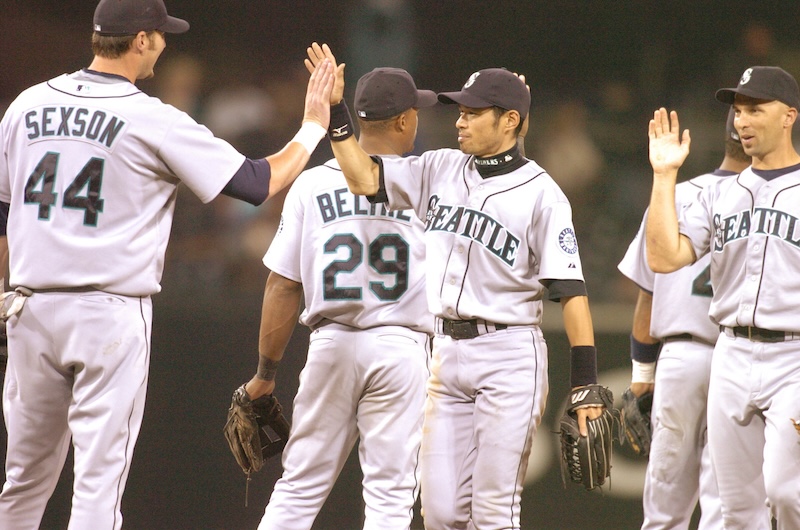
One of the indispensable metrics for discussing Major League Baseball is WAR (Wins Above Replacement).
WAR quantifies how many more wins a player contributes to his team compared to a replacement-level player. It incorporates hitting, defense, and baserunning, allowing comprehensive comparisons across players.
Some of you may be wondering:
- What exactly is WAR?
- What is Ichiro’s WAR?
- How great is Ichiro historically compared to other players?
In this article, we will define WAR, explain how our own bsWAR is calculated, outline its strengths and limitations, and then provide Ichiro’s season-by-season and career totals. We will also compare Ichiro to Shohei Ohtani and other legendary MLB players.
What is WAR? What does it measure?
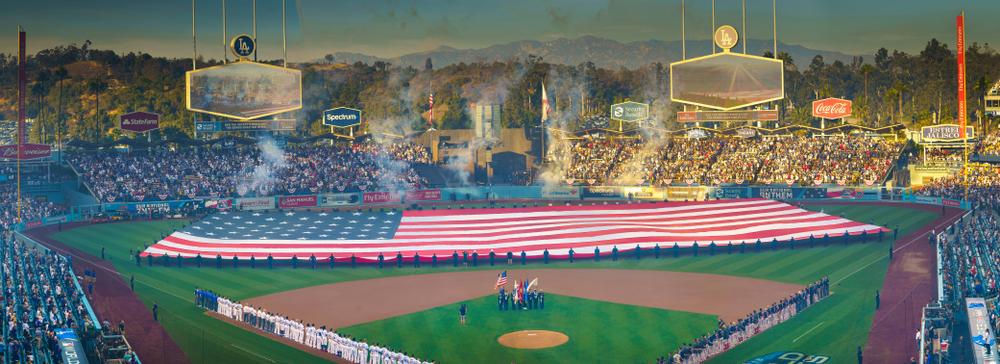
WAR is a key statistic that reflects a player’s total value. Let’s look at it in the following order:
- Definition and calculation of WAR
- How our own bsWAR is calculated
- The merits of WAR
Definition of WAR (Wins Above Replacement)
WAR stands for Wins Above Replacement. It shows how many additional wins a player adds compared to a replacement-level (bench) player.
It integrates offense, defense, baserunning, and pitching into one value. Generally, a replacement-level team is assumed to have a .320 winning percentage, or about 52 wins in a 162-game season.
By comparing against this baseline, WAR measures how much a player improves team performance. Unlike batting average or home runs, WAR evaluates a player’s overall contribution.
How bsWAR Is Calculated
On this site, we do not reprint WAR figures published elsewhere. Instead, we calculate our own version, bsWAR, from official MLB data, adjusting for the league run environment and for ballpark factors.
bsWAR for hitters: Batting value is measured through wOBA and wRAA, with baserunning and defense added on top. For seasons through 2015, the defensive portion is included as an estimate.
bsWAR for pitchers: Pitching value is based on FIP, which strips out the influence of the defense behind the pitcher and evaluates what the pitcher himself controls—strikeouts, walks, and home runs allowed.
Advantages of WAR
The biggest advantage is that WAR condenses a player’s total value into a single number, allowing comparisons between hitters and pitchers on the same scale. This makes it invaluable for MVP voting and Hall of Fame discussions.
WAR is also widely used in contract negotiations and salary evaluations. In recent years, analysts often estimate that “1 WAR equals several million dollars” in player value.
Criticism and Skepticism
While WAR is widely used as a comprehensive evaluation metric, it is by no means perfect. Because there is no single official formula, different calculation methods can produce different numbers for the same player, leading many to ask: “Which number should we trust?”
Here, we will outline the main criticisms and limitations of WAR in the following order:
- Limitations of WAR
- Criticism: “WAR Increases with Playing Time” and “It Can Be Misleading”
Limitations of WAR
WAR is a useful statistic, but its limitations are clear. Defensive evaluation is the hardest component to measure, and the value assigned to the same player can change depending on which defensive metric is used.
Pitcher evaluation is another area where approaches diverge. Some methods rely on fielding-independent results such as FIP, while others use actual runs allowed, and the two can reach different conclusions about the very same season.
Furthermore, WAR cannot fully reflect environmental or team factors. Ballpark dimensions and the quality of a team’s defense affect a player’s numbers, so direct comparisons have inherent limits.
Criticism:“WAR Increases with Playing Time”and “It Can Be Misleading”
Since WAR is a cumulative statistic, players who log more playing time tend to accumulate higher totals. Critics argue this inflates the value of regular players and doesn’t always reflect true talent differences.
For example, a player who stays in the lineup consistently throughout the season can pile up WAR even without standout batting numbers. Because of this, some view WAR as “misleading.”
In some cases, players with average but steady production over many games receive higher WAR than players who deliver dominant performance in shorter stretches.
Thus, while WAR is a helpful tool for player evaluation, it is not a perfect metric. To accurately assess a player’s value, it should be used alongside other statistics such as OPS or ERA.
Ichiro’s WAR: Career and Seasons
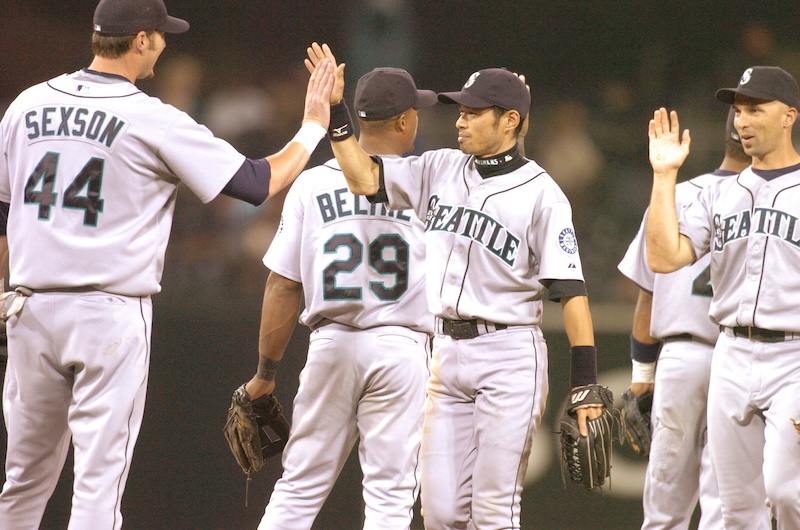
Now, let’s take a closer look at Ichiro’s WAR, both by season and over his career.
We will break it down in the following order:
- Career total WAR and career-high WAR
- Year-by-year WAR trends
Career Total WAR and Career-High WAR
Ichiro’s career WAR and peak WAR are as follows:
| 項目 | 通算 |
|---|---|
| 試合 | 2,653 |
| 打席 | 10,734 |
| 安打 | 3,089 |
| 二塁打 | 362 |
| 本塁打 | 117 |
| 打点 | 780 |
| 四球 | 647 |
| 三振 | 1,080 |
| 盗塁 | 509 |
| 打率 | .311 |
| 出塁率 | .355 |
| 長打率 | .402 |
| OPS | .757 |
| 通算打撃bsWAR | 31.3‡ |
| キャリアハイ打撃bsWAR | 5.9‡(2004年) |
網掛けの指標(FIP・wOBA・wRAA・bsWAR)は、公開されている計数値からリーグ定数・パークファクターを含めて当サイトが独自に算出したものです。参考列は取得元の計数値そのものです。bsWAR は当サイト独自の WAR で、FanGraphs の fWAR・Baseball Reference の bWAR とは計算方法が異なります。‡ 印の年(2015年以前)は守備データ(OAA)が存在しないため、守備はレンジファクター法(同じ守備位置のリーグ平均と比べたアウト関与数を得点に換算)による概算、走塁は 0 として算出しています。打球の難易度を見ていないぶん OAA より粗く、捕手の守備は 0 です。出典:MLB Stats API(MLB Advanced Media, L.P.)/ Baseball Savant / NPB 公式サイト。 最終更新:2026年9月30日 5:18
Ichiro finished his career with 31.5 batting bsWAR. His peak came in 2004, when he posted an outstanding 5.9 bsWAR (for seasons through 2015, defense is included as an estimate). That same year, he set the MLB single-season hits record with 262 hits, hitting .372 while also excelling on defense and on the bases.
During his prime years from 2001 to 2010, he produced between 1.9 and 5.9 batting bsWAR every single season, maintaining elite value year after year. In his later career his bsWAR fell to around 0, bottoming out at -2.0 in 2011. Still, his 10 consecutive 200-hit seasons stand as proof of his remarkable consistency, making him one of the greatest hitters in MLB history.
Year-by-Year WAR Trends
The year-by-year WAR progression is shown in the table below.
| 年度 | 年齢 | チーム | 打席 | wOBA | wRAA | 打撃bsWAR | 本塁打 | 打率 |
|---|---|---|---|---|---|---|---|---|
| 2001 | 28 | SEA | 738 | .365 | 23.8 | 4.8‡ | 8 | .350 |
| 2002 | 29 | SEA | 728 | .352 | 14.9 | 3.8‡ | 8 | .322 |
| 2003 | 30 | SEA | 725 | .346 | 9.6 | 3.2‡ | 13 | .312 |
| 2004 | 31 | SEA | 762 | .379 | 33.0 | 5.9‡ | 8 | .372 |
| 2005 | 32 | SEA | 739 | .336 | 4.3 | 3.0‡ | 15 | .303 |
| 2006 | 33 | SEA | 752 | .342 | 4.3 | 2.7‡ | 9 | .322 |
| 2007 | 34 | SEA | 736 | .365 | 21.4 | 4.8‡ | 6 | .351 |
| 2008 | 35 | SEA | 749 | .332 | -1.0 | 1.9‡ | 6 | .311 |
| 2009 | 36 | SEA | 678 | .372 | 26.0 | 4.2‡ | 11 | .352 |
| 2010 | 37 | SEA | 732 | .335 | 6.6 | 2.8‡ | 6 | .315 |
| 2011 | 38 | SEA | 721 | .285 | -25.6 | -2.0‡ | 5 | .272 |
| 2012 | 39 | SEA | 423 | .279 | -16.7 | -1.3‡ | 4 | .261 |
| 2012 | 39 | NYY | 240 | .347 | 6.7 | 0.2‡ | 5 | .322 |
| 2013 | 40 | NYY | 555 | .285 | -18.2 | -1.3‡ | 7 | .262 |
| 2014 | 41 | NYY | 385 | .301 | -4.9 | 0.0‡ | 1 | .284 |
| 2015 | 42 | MIA | 438 | .253 | -28.0 | -1.3‡ | 1 | .229 |
| 2016 | 43 | MIA | 365 | .323 | 0.3 | 1.1 | 1 | .291 |
| 2017 | 44 | MIA | 215 | .288 | -7.9 | -0.5 | 3 | .255 |
| 2018 | 45 | SEA | 47 | .214 | -4.9 | -0.4 | 0 | .205 |
| 2019 | 46 | SEA | 6 | .112 | -1.3 | -0.1 | 0 | .000 |
網掛けの指標(FIP・wOBA・wRAA・bsWAR)は、公開されている計数値からリーグ定数・パークファクターを含めて当サイトが独自に算出したものです。参考列は取得元の計数値そのものです。bsWAR は当サイト独自の WAR で、FanGraphs の fWAR・Baseball Reference の bWAR とは計算方法が異なります。‡ 印の年(2015年以前)は守備データ(OAA)が存在しないため、守備はレンジファクター法(同じ守備位置のリーグ平均と比べたアウト関与数を得点に換算)による概算、走塁は 0 として算出しています。打球の難易度を見ていないぶん OAA より粗く、捕手の守備は 0 です。出典:MLB Stats API(MLB Advanced Media, L.P.)/ Baseball Savant / NPB 公式サイト。 最終更新:2026年9月30日 5:18
通算本塁打 117本、300本まであと 183本。
この評価は当サイトが取得した計数値から自動生成しています。最終更新:2026-09-30 05:18:01
Looking at Ichiro’s year-by-year bsWAR, he started strong in his 2001 Rookie of the Year and MVP season, posting 4.8 batting bsWAR with a .350 average.
He then reached his career peak in 2004, when his batting bsWAR rose to 5.9, the highest mark of his career. From 2001 to 2010, he consistently maintained high values, serving as the face of the Mariners and excelling in all aspects of the game.
After 2011, however, his numbers gradually declined. By 2015, his bsWAR had dropped into the negatives (-1.3). Even so, following his move to Miami, he managed to post solid contributions, recording 1.1 batting bsWAR in 2016.
Comparing Ichiro’s WAR with Japanese Players and Other Major Leaguers
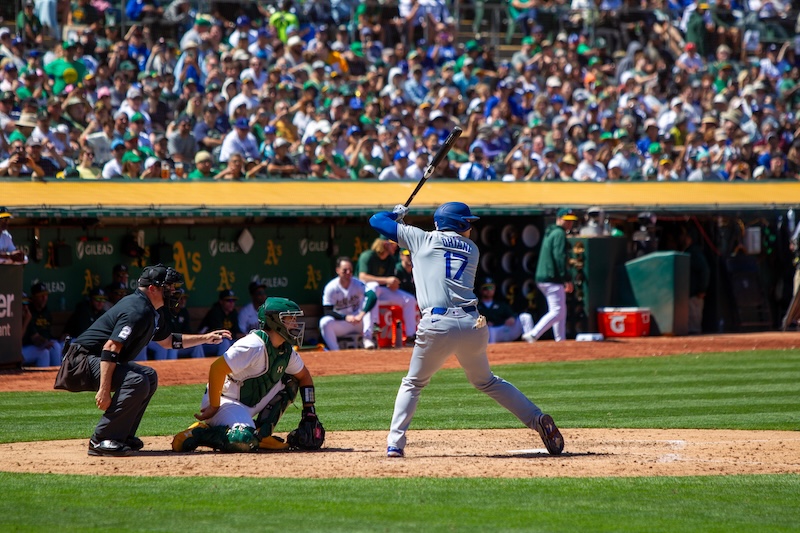
Ichiro’s WAR stands out among Japanese players, both in single seasons and over his entire career. Here, we will look at:
- Seasonal WAR rankings for Japanese position players
- Comparisons with other MLB stars
Seasonal WAR Rankings for Japanese Position Players
Among Japanese position players, the single-season benchmark is Ichiro’s 2004 season, when he posted 5.9 batting bsWAR with a .372 average and a .379 wOBA.
By comparison, Shohei Ohtani has also posted elite single-season figures at the plate.
Because Ohtani contributes not only as a hitter, runner, and fielder but also as a pitcher, his overall impact extends beyond what WAR alone can measure.
Comparing with Other Players
Looking at career totals, Ichiro’s 31.5 batting bsWAR was built almost entirely during his decade in Seattle. Shohei Ohtani, meanwhile, adds value both as a hitter and on the mound, so his value is split between batting bsWAR and pitching bsWAR.
Among the game’s biggest stars, players like Mike Trout have piled up far larger career totals, which might make Ichiro’s figure look modest at first glance.
Nevertheless, Ichiro debuted in the majors at 27 and still posted ten straight positive seasons of batting bsWAR from 2001 to 2010, which firmly cements his status as an MLB legend.
What WAR Reveals About Ichiro’s Value [Summary]
Ichiro’s bsWAR during his prime was among the very best in the league, highlighted by his career-high 5.9 in 2004. Over his career, his 31.5 batting bsWAR leaves him unrivaled among Japanese position players.
Even when compared to a new-generation superstar like Shohei Ohtani, Ichiro’s steady, season-long contributions to team victories demonstrate why he is rightly regarded as a legend.
